
Anvitha Sathya
Our WINS Medical Student Committee launched a new program highlighting faculty with a feature “Woman of the Month” starting in November, 2022. Below find our 2022 featured women and their incredible accomplishments.
January 2023: WINS Woman of the Month
Sheri Dewan, MD, MS
Northwestern Medicine
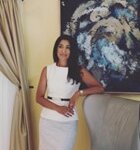
“No matter how big the obstacles, there is always a path.”
- What led you to pursue neurosurgery?
I was interested in pursuing a field that allowed challenges, progress, as well as innovation. That drew me to neurosurgery at a young age.
- What are some of the accomplishments you are most proud of?
I’m proud that I was able to pursue a career in neurosurgery, become one of roughly 200 board-certified, female neurosurgeons in the United States and balance three children and a marriage of 17 years. I’m also a dog parent to a mini goldendoodle and an Australian cattle dog.
- What are some of the challenges you’ve had to face as a woman in neurosurgery?
As a woman in neurosurgery, I feel that I’ve had to work harder than my colleagues in order to excel. On the other hand, I’ve also had male colleagues who have been some of my greatest supporters.
- What advice would you give for women interested in neurosurgery or currently pursuing neurosurgery?
I would tell you to never give up on your hopes and dreams. No matter how big the obstacles, there is always a path.
- Tell us a fun fact about yourself!
I’ve lived in five countries, love to scuba dive and am the author of an upcoming book! My favorite actress was Angela Lansbury and my favorite movie is “The Parent Trap.”
December 2022: WINS Women of the Month
Krystal Tomei, MD, MPH
Assistant Professor, Department of Neurological Surgery
Case Western Reserve University School of Medicine

“Ultimately, if you do what you love and you love what you do, you’ll have a successful career. “
- What led you to pursue neurosurgery?
When I was a child, my cousin who was only a few years younger than me was in a bad car accident and suffered a traumatic brain injury. I was in 5th grade when I had my first health class and decided to become a doctor, and after trying to learn more about what happened to my cousin and his recovery, I settled on brain surgery (when you’re 11 you don’t know of may other kinds of “brain doctors”). Thankfully, I never changed course and when I finally got to shadow in neurosurgery, I loved every minute of it. In particular, I love pediatric neurosurgery in particular because you form long-lasting relationships with the patients and their families. Seeing these kids grow up and live their best life, getting updates from parents on holidays and milestones, and knowing you played even a role in that – I can’t think of a more rewarding career.
- What are some of the accomplishments you are most proud of?
This is a weird question for me to answer. I’m proud of my career, where I am today and all the opportunities I have had, but I guess it’s hard to pull anything out as a specific “accomplishment.” I think what I’ve always tried to do is to pursue opportunities that meet four criteria: what I love, what I’m good at, what I feel I can contribute to and what I learn or grow from. In clinical work, that’s been developing a practice in congenital spinal disorders and craniofacial disorders. In leadership, that’s been working within the medical education system to make systematic improvements in how we educate medical students and residents. I’m happy to be where I am, and proud to be able to do the things I love, and I guess that’s an accomplishment in itself.
- What are some of the challenges you’ve had to face as a woman in neurosurgery?
I think the main challenge I’ve faced, with so few women in neurosurgery, it changes the landscape and strategy of finding mentors – the idea of finding “someone like me” just wasn’t realistic. As a resident, there was not a female faculty member in my program until my chief year, but several of my male faculty were both incredible mentors and sponsors, helping me gain access to incredible opportunities on the national landscape. My chair, Dr. Peter Carmel, was an incredible mentor in neurosurgery, pediatric neurosurgery and national involvement. He embraced my interests and opened so many doors for me. In fellowship, I had a fantastic mentor in Dr. Ruth Bristol, however all of the faculty were incredibly formative in my career development, in particular Dr. P. David Adelson who took a chance on me as their first fellow. Then in my first job, it was my past and current chair, Dr. Warren Selman and Dr. Nicholas Bambakidis who mentored me and continue to help me grow in leadership here. I’ve had incredible female mentors along the way in various aspects of my career and leadership, but I think it’s important to acknowledge that while there’s still a bit disparity in the numbers, our supportive male colleagues play such a critical role in our career development.
- What advice would you give for women interested in neurosurgery or currently pursuing neurosurgery?
I say go for it! Neurosurgery is a fantastic field. Might there be some differences for women in the field? Sure. But they aren’t insurmountable. You will find mentors and allies wherever you go who will support your career, and they don’t have to only be women. It’s great to have that camaraderie, but it may not be possible everywhere to be surrounded by women. Know how important that is to you and consider that when you look at programs and a job. Ultimately, if you do what you love and you love what you do, you’ll have a successful career.
- Tell us a fun fact about yourself!
I love to travel, and really, I travel to eat. If I could just travel the world and eat like a local everywhere I would be perfectly content. But I draw the line at bugs. I won’t eat bugs. Or brains. For obvious reasons.
November 2022: WINS Women of the Month
Dr. Shenandoah Robinson, MD
Professor of Neurosurgery
Johns Hopkins Medicine
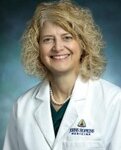
“Focus on being the best you can be at every step, wherever you are along your journey in education, training and practice. “
1.What led you to pursue neurosurgery?
When I started medical school, I was considering training in family practice. During the first two years of medical school, I unexpectedly gravitated towards surgery and the neurosciences. I was drawn to the teamwork and pace in surgery. And, I could not get enough of the neurosciences. For me, neurosurgery was the surgical specialty that was closest to restoring a person’s humanity. I first became interested in neurosurgery during brain dissections led by neurosurgeons. After I observed my first brain surgery, I was hooked! I would do it all over again in a heartbeat.
- What are some of the accomplishments you are most proud of?
In pediatric neurosurgery, we often care for children with life-threatening illnesses. It is very gratifying when we are able to improve their outcomes. In some ways, it’s like we become a member of the family. It’s also been exciting to contribute to research that may change how we manage currently intractable neurological problems. And I feel fortunate to have had the opportunity to mentor so many bright and engaged students and trainees at various stages of their careers.
- What are some of the challenges you’ve had to face as a woman in neurosurgery?
Neurosurgery is a challenging career in many respects – emotionally and intellectually – regardless of one’s gender. Neurosurgery is also exceedingly rewarding. In pediatric neurosurgery, we dispense bad news more than most other fields do. But we also share a lot of joy with our families, typically over several years. Often, they would not be a whole family without our intervention.
- What advice would you give for women interested in neurosurgery or currently pursuing neurosurgery?
Not just for women, but everyone – it’s to focus on being the best you can be at every step, wherever you are along your journey in education, training and practice.
- Tell us a fun fact about yourself!
While I have spent the past few decades in large cities at academic institutions, I grew up near a small village in western Ohio called Tawawa (population 10).