

As a medical student preparing to enter residency, I thought that I knew a lot of the qualities that would be important and that I would value in a training program. The list was long: clinical exposure, case mix, case volume, total number of cases by the end of graduation, percentage of graduates that went on to have careers in academic neurosurgery, early autonomy in the operating room, research opportunities, opportunities to pursue advanced degrees or participate in international initiatives . . . and several other factors. While mentorship and faculty involvement were qualities that crossed my mind, I wouldn’t say that they were traits that I focused on when comparing programs and preparing my rank list. I can now say as a PGY 3 resident that mentorship, despite the fact that there are no female faculty members in my training program, has had an immense impact on my training and residency experience so far.
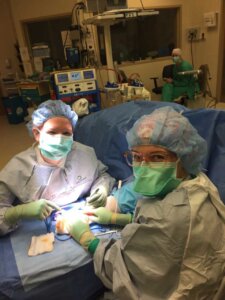
In addition to the high volume and wide variety of clinical exposure, one thing that has made my training at LSU Health Sciences Center in New Orleans unique is that I have been able to train alongside two other female residents. While at first this may seem like a small fact, just a number or a statistic passed over on the program website, it is important to understand the gravity and implications of this – something that I did not initially understand or appreciate as I began my training two and a half years ago. Currently in the United States, approximately 50% of medical school graduates are female, but females account for only 18% of neurosurgery residents and 9% of board-certified neurosurgeons. When reviewing programs during my own interview trail, it was not uncommon to see programs with none or only one female resident. Programs with more women than that average were viewed as “forward” or “diverse.” It wasn’t until I had matched and begun training that I began to truly understand what having three female residents in our program actually means.
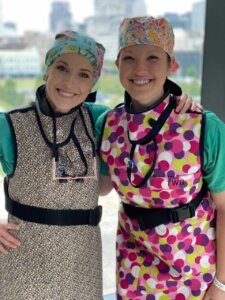
 We still start rounds right on time, work hard and strive to provide our patients with excellent care. We search the literature for new evidence to support our decision making. We participate in weekly conferences and monthly grand rounds to discuss our preoperative planning, morbidity and mortality and multidisciplinary oncology patients. The list goes on and on of all the activities that are expected of neurosurgeons-in-training. In addition, having two other female residents in my training program has taught me that we care for each patient as if they were our family member or friend. We take the time to give family members the information they need to care for their loved ones, even when it’s difficult. We consider the cosmesis of our surgical incisions and closures. We hang white string lights in the workroom in October to ring in the holiday season. We take time each week to Clorox the tabletops and spray Febreze in the workroom because “How long has that sandwich been in the mini fridge?” We bring finger food snacks and cucumber “spa” water to help us get through a long day of clinic. We decorate for Mardi Gras and take turns bringing in King Cake, which never lasts more than a few hours. We listen to show tunes on Tuesdays and enjoy Walt Disney Wednesdays – much to our staff’s dismay. We schedule baby showers on weekends when as many of our coresidents can attend as possible. We always stop to watch the latest “Look what my baby did last night” video. We have cheetah print, pink hearts and polka dot lead aprons and have a small boutique’s worth of cloth scrub caps that are worn in rotation. We turn the TV to Bravo and the Hallmark Channel – even though the guys turn it back to ESPN every time.

I’m grateful to the other women in my training program who have shown me that it is possible to be a successful resident, diligent worker, supportive spouse and loving mother, and that all of these facets of themselves do not have to be mutually exclusive. I have seen them constantly striving to achieve the dreams and goals that they set out to achieve in their careers more than 10 years ago, and having their example to follow has been invaluable to me. Seeing them remain true to all of these different arenas of life that women often juggle simultaneously, while still maintaining a successful residency and entering their fellowships and careers, gives me hope and helps me view the future for my own path, not as a distant trail winding through narrow and fog-filled woods, but as a road reaching to the horizon with the full splendor of the dawn illuminating the morning, after which the entire length of the day awaits. From where I stand, having someone who looks like me has made all the difference.