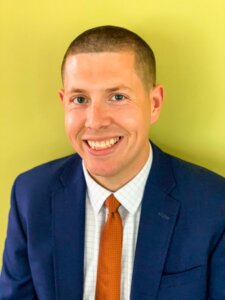
James Wright, MD
The 39th Annual National Neurotrauma Society Symposium kicked off on June 26 in Atlanta and was a resounding success. The AANS/CNS Update on the Clinical Management of Neurotrauma was Chaired by Eve Tsai, MD, PhD, FAANS, and included an update from the current chair of the Joint Section on Neurotrauma and Critical Care, P.B. Raksin, MD, FAANS, Andrew Reisner, MD, FAANS, FACS, FAAP, chair of the World Federation of Neurological Surgeons provided an update from WFNS and a global perspective which served as an excellent segway into discussions of Management of TBI in low and middle income Countries by Andres Rubiano, MD, PhD(c), FACS, IFAANS. The talk was highlighted by recent publications and work centered on protocol development in resource limited areas. Greg Hawryluk, MD, PhD, FRCSC, FAANS, provided the background and an update on future directions for severe TBI algorithms before debating James Wright, MD, on the topic of Big Data and patient management with respect to TBI.
Ann Parr, MD, PhD, FAANS, FRCSC, served as the session and debate chair for the second session of the day which focused on Neurotrauma Lessons. Presentations were given by Emily Sieg,MD, Jess Schuette, MD, FAANS, P.B. Raksin, MD, FAANS, and Dr. James Wright. The presenters covered a wide range of topics including Sodium Management in TBI, lessons to learn from the military and neurotrauma career paths. Dr. P.B. Raksin outlined the difficulties with delivery of neurosurgical care since the onset of the COVID pandemic with a special emphasis on delivery of emergent care. The session was highlighted by a very spirited debate on Biomarkers in TBI by Brad Dengler, MD, FAANS, and Jeffrey Tomlin, MD, FAANS, that was very well received.
Dr. Greg Hawryluk served as the session chair for the third session of the day which focused on New Things in the Management of Brain and Spinal Cord Injury. The session highlights were on topics of TBI prognostication, spinal cord injury, cortical spreading depolarizations and social media in neurosurgery. Berje Shammassian, MD, spoke eloquently on the pitfalls of early prognostication in TBI and the impact of withdrawal of life sustaining measures in TBI and TBI clinical trials. Ann Parr, MD, PhD, FAANS, FRCSC, presented on her work on the Mechanisms of Repair of Spinal Cord Injury and Transplanted Neurons as Part of the Relay System and discussed some of her work in ongoing clinical trials. Laura Ngwenya, MD, PhD, FAANS, presented her work at the University of Cincinnati on Spreading Depolarizations in TBI and provided some clear case examples for diagnosis and management. The session ended with a discussion by Joseph Linzey, MD, MS, on pearls and pitfalls of social media in neurotrauma, with a special emphasis on the implications of bias in discussion of positive outcomes and relative lack of discussion of poor outcomes on social media platforms.
The fourth and last session of the day focused on clinical trials and Alan Hoffer, MD, FAANS, served as the session chair. The session began with Michael Hildebrand, MD, discussing barriers and advances in translating preclinical knowledge into new pain therapies. Michael Fehlings, MD, PhD, FAANS, FRCS,then gave an excellent presentation on the history of clinical trials with respect to cervical spinal cord injury and discussed some of his ongoing work in this area. Halinder Mangat, MD, presented the basis of the ELASTiC trial which aims to examine outcomes of TBI after early lumbar CSF drainage. Dr. Eve Tsai then spoke about clinical translation of research before completing and winning one of the most entertaining debates of the day against Fehlings, MD, PhD, FAANS, FRCS, on the value of early decompression for spinal cord injury.
While the first day was focused on predominantly neurosurgical clinical topics, the day was very much a success and served as the springboard for a wonderful symposium.